Gardening Setup

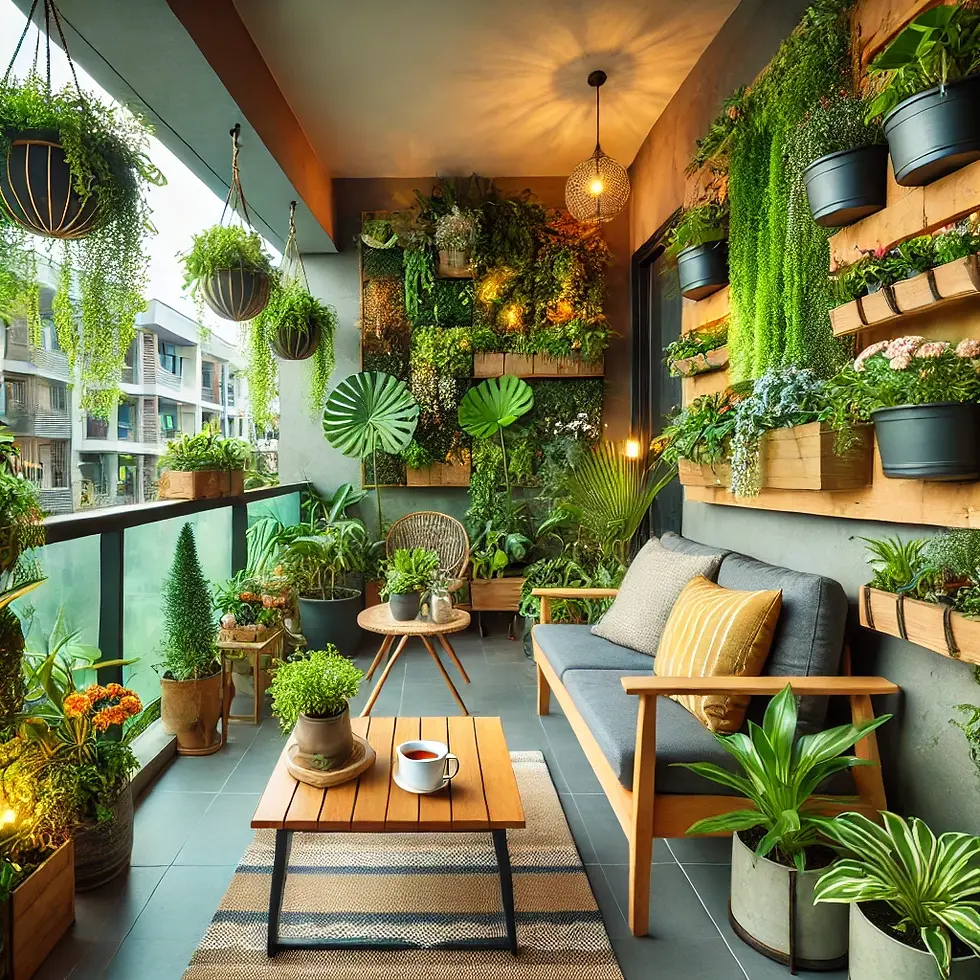
Gardening Setup: A Complete Guide for Balcony, Terrace, and Indoor Gardening
Gardening is a rewarding activity that enhances your living space and provides fresh produce, greenery, and a touch of nature. Whether you have a small balcony, a spacious terrace, or indoor space, setting up a thriving garden is possible with proper planning. Here’s a comprehensive guide to help you get started.
1. Balcony Gardening Setup
Balconies provide an excellent space for container gardening. Here’s how to set up your balcony garden:
Choosing the Right Plants:
Opt for compact plants like herbs (basil, mint, coriander), leafy greens (spinach, lettuce), and flowering plants (marigolds, petunias, geraniums).
Consider climbing plants like money plant or jasmine if you have vertical space.
Containers and Planters:
Use lightweight pots, hanging baskets, and vertical planters to optimize space.
Self-watering planters can reduce maintenance efforts.
Soil and Fertilizers:
Use a nutrient-rich potting mix with good drainage.
Vermicompost and organic fertilizers help in maintaining plant health.
Watering and Sunlight:
Ensure proper drainage to avoid waterlogging.
Place sun-loving plants where they get 4-6 hours of sunlight.
Additional Tips:
Use railing planters to save floor space.
Consider a drip irrigation system for easy watering.
2. Terrace Gardening Setup
Terrace gardens allow more flexibility in plant selection and layout. Follow these steps for a lush terrace garden:
Choosing Plants:
Grow vegetables like tomatoes, chilies, brinjals, and cucumbers.
Include fruit plants in large containers (lemon, guava, pomegranate).
Add flowering plants and medicinal herbs.
Planters and Beds:
Use raised garden beds, grow bags, and large pots.
Hanging and trellis planters can maximize space.
Soil and Composting:
Use lightweight soil with good aeration.
Regularly add compost or organic matter to enrich the soil.
Watering and Drainage:
Install a proper drainage system to prevent water accumulation.
Use mulching techniques to retain moisture.
Structural Considerations:
Check the weight-bearing capacity of the terrace.
Use protective layers like waterproof sheets to prevent seepage.
Additional Tips:
Consider hydroponics or aquaponics for soil-free gardening.
Create shaded areas for heat-sensitive plants.
3. Indoor Gardening Setup
Indoor gardens provide greenery and improve air quality. Here’s how to create an indoor garden:
Choosing Indoor Plants:
Low-maintenance plants like snake plants, pothos, spider plants, and peace lilies.
Herbs like rosemary, thyme, and parsley can thrive indoors.
Containers and Placement:
Use decorative pots that complement your decor.
Hanging planters, wall-mounted shelves, and glass terrariums save space.
Lighting and Temperature:
Ensure proper natural light near windows or use grow lights for dark corners.
Maintain moderate humidity levels for plant health.
Watering and Care:
Avoid overwatering; use pots with drainage holes.
Wipe leaves occasionally to prevent dust buildup.
Additional Tips:
Use hydroponic kits for advanced indoor gardening.
Introduce air-purifying plants for better indoor air quality.
Final Thoughts
Setting up a garden in your home, whether on the balcony, terrace, or indoors, can be a fulfilling experience. With the right selection of plants, proper care, and some creativity, you can transform your living space into a green haven. Happy gardening!
This version organizes the content into clear sections and subsections, making it easier to read and follow.


Comments